- Home
- About Us
- Services
- Locations
- Livermore, CA
- Excavation & Grading Services Livermore, CA
- Concrete Construction Services Livermore, CA
- Underground Utilities & Trenching Services Livermore, CA
- Drainage & Stormwater Services Livermore, CA
- Erosion Control, BMPs & Hydroseeding Services Livermore, CA
- Industrial & Facility Construction Services Livermore, CA
- Livermore, CA
- Testimonials
- Contact Us
- Home
- About Us
- Services
- Locations
- Livermore, CA
- Excavation & Grading Services Livermore, CA
- Concrete Construction Services Livermore, CA
- Underground Utilities & Trenching Services Livermore, CA
- Drainage & Stormwater Services Livermore, CA
- Erosion Control, BMPs & Hydroseeding Services Livermore, CA
- Industrial & Facility Construction Services Livermore, CA
- Livermore, CA
- Testimonials
- Contact Us
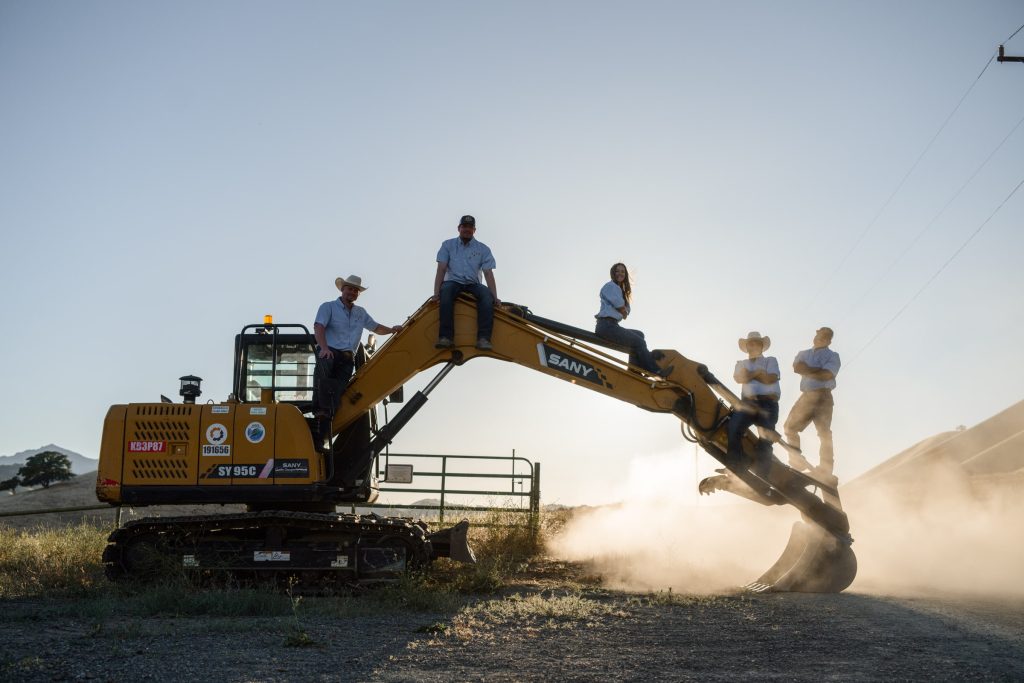
DIGS exists to make complex fieldwork easier for the clients who depend on us. We deliver civil, architectural, structural and facility-related construction with disciplined planning, clear communication and professional execution from the first site walk through final restoration.
Address
Phone:
Email Address:
Location:
Clayton CA 94517
Concrete Construction Services Livermore, CA
Why Trust OurConcrete Construction Services Livermore, CA?
Livermore sits on adobe clay. It swells when winter rain soaks in. It shrinks when summer heat bakes it dry. Concrete poured on that ground moves with it, and that is when slabs crack, lift, and settle.
We build flatwork to handle that movement. Whether your property is in South Livermore, Springtown, Sunset East, or near Downtown, we start with the soil, not the surface.
We dig past loose topsoil. We install compacted Class 2 aggregate base. We reinforce with rebar, not wire mesh. We place control joints where the slab should crack, so it never cracks where you can see it.
What is in it for you? A driveway, patio, or walkway that stays level and clean for years. No trip hazards. No repair bills after the second rainy season. No tearing out a slab you just paid for.
Most cracked concrete in Alameda County fails from the ground up. We fix the ground first. Call us for a site evaluation and soil-risk assessment before you pour anything.
Ready to Start Your Groundwork Project?
From precision structural excavation to complete underground infrastructure, DIGS provides the expertise and machinery to execute your project safely and efficiently.
Services We Provide
What Makes Our Professional Concrete Construction Services Stand Out?
A good pour follows a plan. We run the same four steps on every job.
Step one is sub-grade excavation. We dig below the uncompacted topsoil, treat the native clay, and compact a dense layer of base rock. Everything else sits on this layer.
Step two is formwork and steel. We set forms to exact grade and tie a #3 or #4 rebar grid on chairs. The steel sits at the right height inside the slab, where it can resist expansion and shear forces.
Step three is the mix. We order high-PSI concrete suited to California conditions. We control the water-to-cement ratio and use curing agents. Extra water on site weakens the slab. We don’t add it.
Step four is joints and sealing. We map control joints to manage expansion and contraction. Then we apply a durable weather sealer.
You get a slab with a plan behind it. Each step is finished and checked before the next begins. The result is concrete built to handle Tri-Valley heat and winter rain.
Case Studies
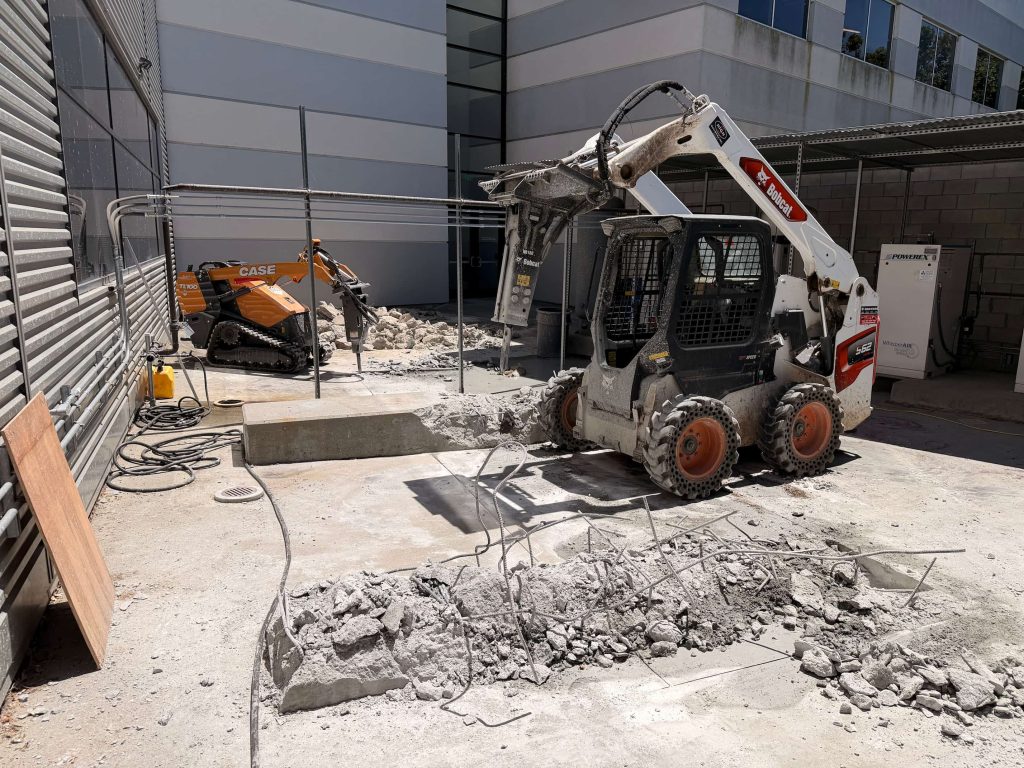
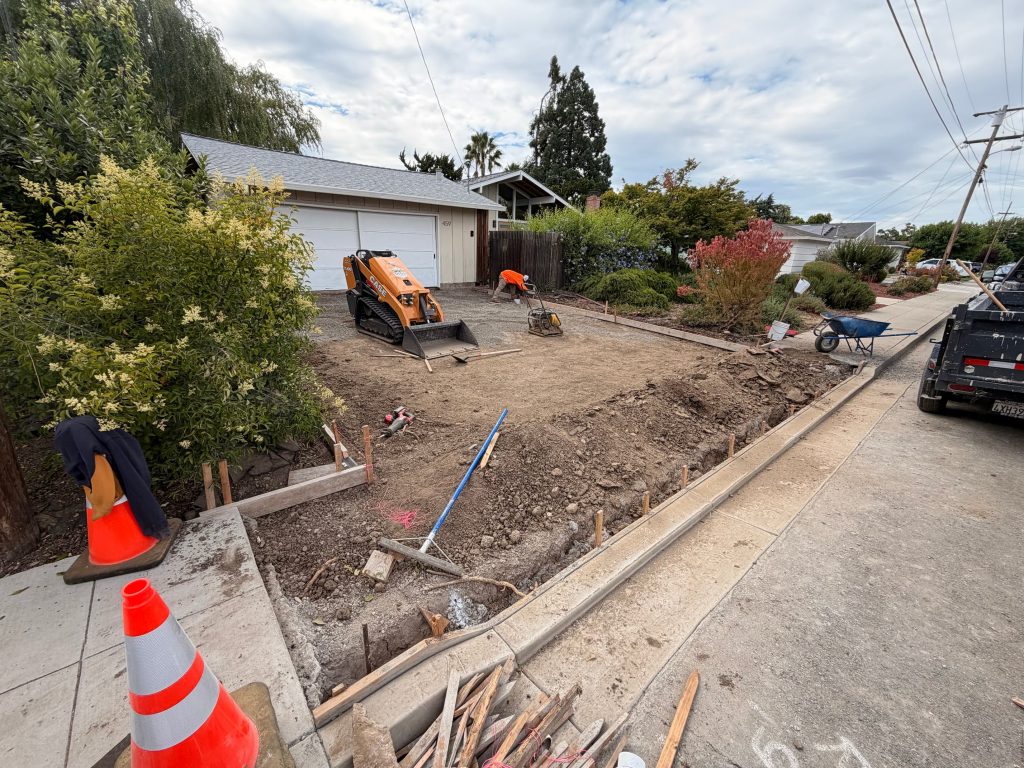
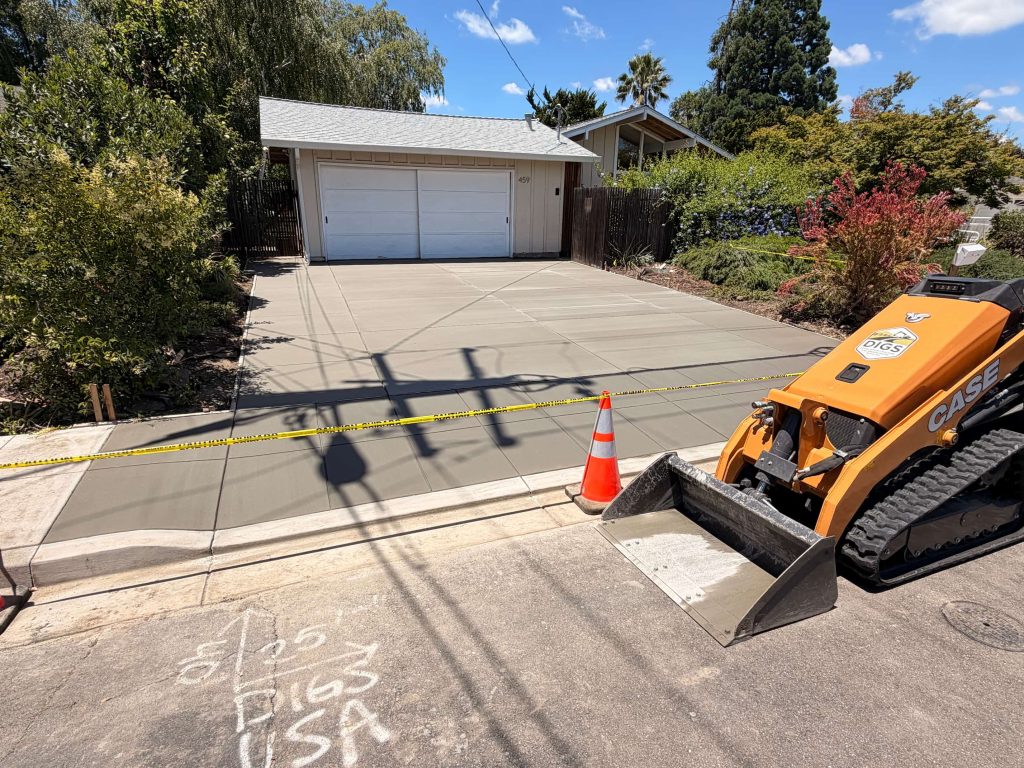
The homeowner’s old driveway had heaved near the garage and cracked across the apron. We removed the slab and excavated the failed sub-grade. We compacted a 6-inch Class 2 base, tied a #4 rebar grid, and poured a broom-finished driveway with planned control joints. It is level, drains cleanly, and handles daily truck traffic.
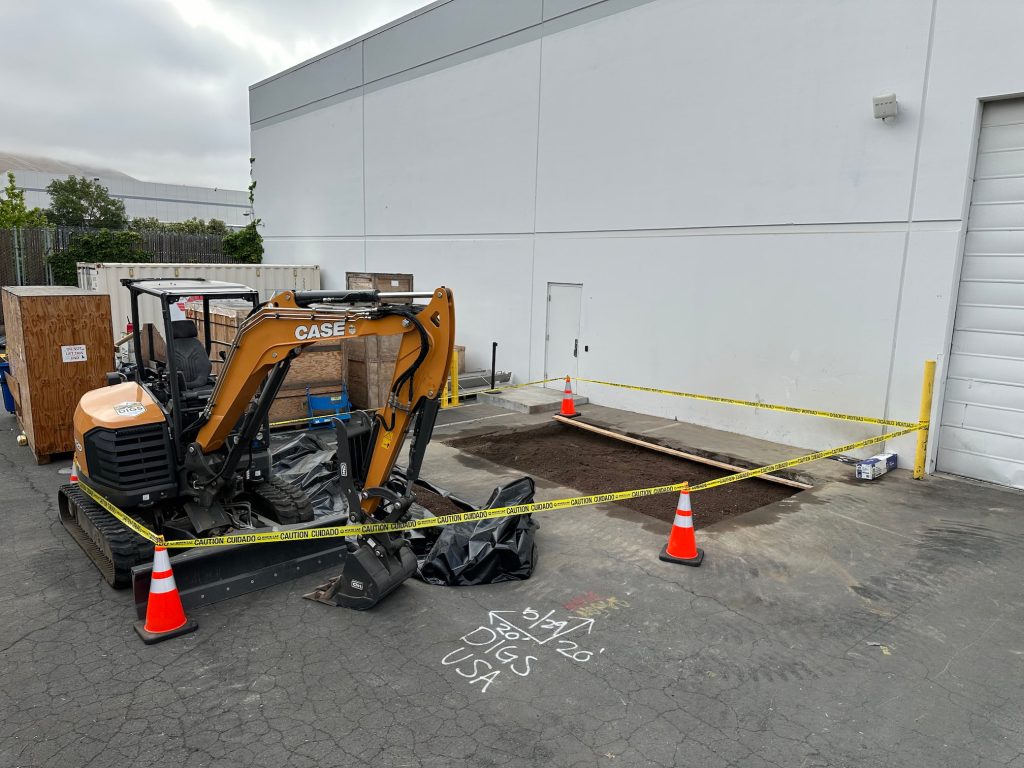
A Arroyo Road homeowner wanted a patio that matched their wine country property. We prepped the clay with a compacted base and a moisture barrier. We reinforced the slab with rebar and poured a stamped pattern in a warm stone tone. We finished with UV-resistant sealer. The patio holds its color and stays crack-free.
Drake Infrastructure and Groundwork Services (DIGS)
RECENT PROJECTS
Concrete Construction FAQs for Livermore, CA
How do you prevent concrete flatwork and driveways from cracking in Livermore's expansive clay soil?
We excavate below loose topsoil and compact an aggregate base. We add a rebar grid and place control joints. This keeps the slab from moving with the clay.
Do I need a city permit from Livermore Building & Safety for a patio, driveway, or retaining wall installation?
It depends on the scope. Retaining walls and structural slabs usually need permits. We check requirements with the City of Livermore Building Division and handle the paperwork.
What is the cost per square foot for stamped vs. broom-finished concrete in the Livermore Valley area?
Stamped concrete costs more than broom-finished because of added labor, color, and sealing. Soil conditions and slab thickness also affect price. We give a written, itemized quote after a site visit.
How long before I can park on a new driveway?
Walk on it after 24 to 48 hours. Keep cars off for at least 7 days. Heavy trucks should wait the full 28 days for the slab to reach design strength.
How do I keep stamped concrete color from fading in Tri-Valley sun?
Seal it after curing. Reseal every 2 to 3 years. Wash it with a mild cleaner, not harsh chemicals. UV-resistant sealer keeps the color rich through hot Livermore summers.